
The Lenton Method®
The only method of canine massage to be clinically trialled, tested and verified, the Lenton Method® was developed by CMTC Director, Natalie Lenton, from her work in the canine and human bodywork field.
Lenton Method® - evidence-based, clinically trialled bodywork for dog’s you can trust


View & Philosophy of The Lenton Method®
A Different Point of View
A different view of the dog is taken during the Lenton Method®. The dog is not just seen as a
dog
with anatomy and an injury or disease. Rather, they are seen as an individual with spirit and a
soul who share their life experience with their owner and their greater outer, and inner,
environment.
The Organ of Consciousness
Fascia is often termed 'the organ of proprioception' as well as 'the organ of consciousness' and
in research has been found to play a role in somatic memory. This means that past injuries or
emotional stress can create long-term restrictions in the tissue, including perpetual tissue
injury and stress as seen with ongoing chronic diseases.
This is why the Lenton Method® works so profoundly for dogs with ongoing issues like arthritis, hip/elbow dysplasia, and spondylosis to name but a few.
"Research by those such as Dr. Robert Schleip suggests that skilled hands-on techniques of myofascial release can help release these restrictions, improving both physical and emotional well-being."
It is this human model of care which, with the Lenton Method®, is now available for dogs.
Clinical Research & Impact
Winchester University researched the Lenton Method® with 527 dogs and 68 therapists from the Canine Massage Guild, and utilised Lenton's concept of the '5 Principles of Pain' as ways to evaluate initially and then re-evaluate for improvements.
It was deemed that simply measuring stride length and muscle mass did not determine the positive impact that this therapy has on not just the body but also the mind and spirit. Think of this as personality and character if this is more palatable for you for this discussion. However as caring dog owners, and some professionals, there would be very few who did not agree that the dog was not 'just a body' but had an ineffable quality of essence and individuality within their spark of life.
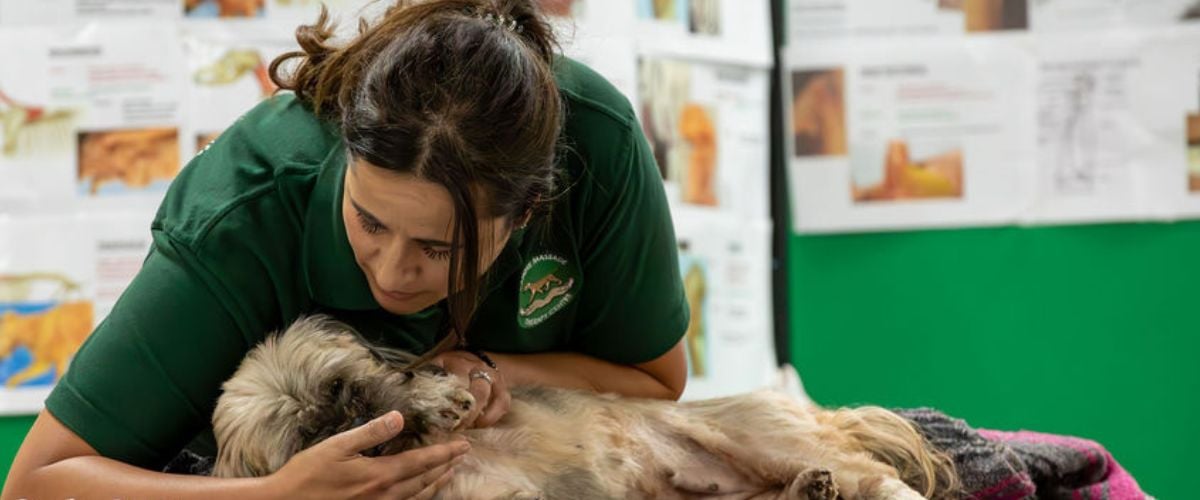
A therapist trained in the Lenton Method® does not just want a dog to 'lie down and be massaged' but rather is encouraged to interact, engage and create a 'conversation' with the therapist, using both body language, the language of touch and other methods.
The therapist is seen as part of the technique and so students are taught a gentle non-threatening approach, various bio-mechanical seating positions for themselves and the dog, so they can achieve parasympathetic synergy with one-another during treatment. This is something that is created and cultivated over a period of time.
"We work with the dog, not on the dog"
What is the Lenton Method®?
The Lenton Method® is a 3-tiered approach to the evaluation, treatment and re-evaluation of the canine patient who presents with soft tissue or musculoskeletal injuries and/or degenerative diseases like canine osteoarthritis. It is also utilised for emotional regulation and deeply ingrained patterns of trauma which have become embedded in the fascia. Think of it like this, when there is a behaviour or physical issue, the fascia will change in shape and tensegrity: so we change the fascia, change the posture, change the behaviour.
Tier 1: Advanced Palpation
The practice of informed touch involves the therapist’s ability to read and translate texture, tone, tenderness and temperature of the many muscles of the body (the 4T’s) using a comprehensive and structured palpatory procedure. Guild therapists also utilise the ‘3 Interconnected Qualities of Fascia’ model (Luchau 2015) simultaneously with the 4T’s for assessment and re-evaluation.
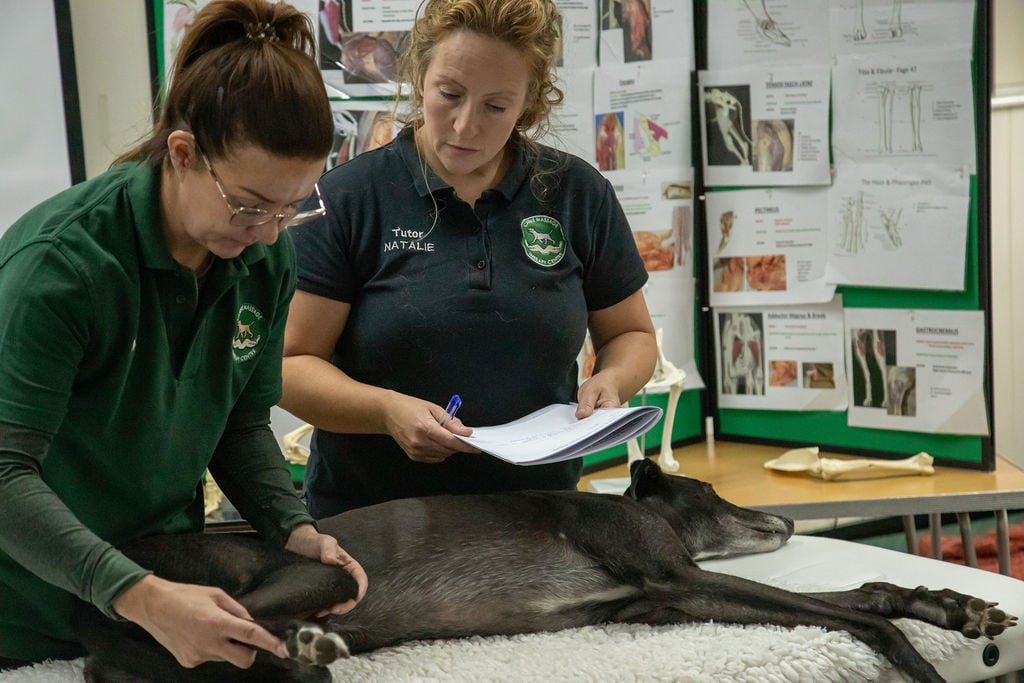
A palpation or muscular health check will assess around 100 (50 pairs) muscles along with fascia which will be built upon during treatment. The therapists use a range of different and varied palpatory techniques alongside grip modulation and force control for a comfortable experience. Palpatory literacy is a key skill necessary for gaining a thorough picture of primary and secondary issues including overcompensation. This listening touch requires in-person training—the Lenton Method® requires respect, integration and time for the therapist to develop.
Tier 2: BodyMapping
During their training, therapists commit to memory a comprehensive anatomical map of the dog’s musculature and fascia along with the precise locations of injuries which include strains, trigger points, hypertonicity and myofascial pain.
This promotes consistency between practitioners and is utilised in conjunction with Tier 1: Advanced Palpation. The therapist will also integrate orthopaedic testing to analyse joint function which is important for chronic pain management of disease, treatment planning, re-evaluation and understanding when referral back to a vet for diagnosis is required for best practice procedures.
Tier 3: The 7 Series Protocols
A series of complex direct neuromyofascial releases to address chronic structural imbalance and fascial dysfunction as a result of soft tissue injury, degenerative joint disease and emotional imbalance. Following Tiers 1 & 2, the 7 protocols may be preceded by Swedish, sports and deep tissue massage to prepare the structures, nervous system and mind of the dog.
We are essentially asking for a parasympathetic nervous system response so that the profound nature of the Protocols can take strong effect. Applied with often profound and long-lasting results as determined by the indicators presented and outcome achieved, they are a key factor in the success of the therapy. Superficial, Deep & Periosteal fascia is addressed and it is a safe therapy for younger and senior dogs alike.
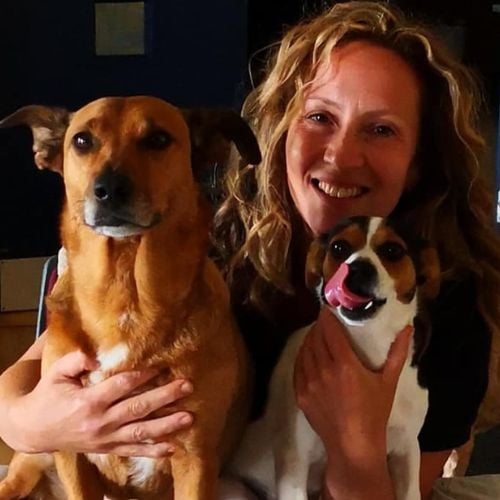
The Architect of the Method
Natalie Lenton
Director of the CMTC & Creator of The Lenton Method®
The Lenton Method® was born out of a profound need for a scientifically rigorous, measurable, and highly effective framework for canine physical therapy. With an extensive background spanning both human and canine bodywork, Natalie recognized that the canine community required a standard of clinical care that moved beyond generalized massage.
Her mission was simple yet monumental: to formalize a methodology that therapists could rely on to achieve consistent, profound results for dogs suffering from chronic pain, while fundamentally respecting the dog's autonomy and somatic experience.
Today, this method is taught exclusively through the Clinical Canine Massage Diploma and is the only method of its kind to be clinically trialled.
What is Fascia?
Fascia is a continuous, three-dimensional network of densely innervated connective tissue that surrounds, supports, and interpenetrates all structures in the body; muscles, bones, organs, and nerves. It is highly innervated, i.e., it has an enormous number of sensory nerve endings as well as proprioceptors and mechanoreceptors, and is therefore an important contributor to the way we experience our bodies or what is sometimes referred to as the ‘umwelt’.
Fascia..10 x Faster than nerve
While your dog's nervous system is like high-speed wiring, their fascia is the fiber-optic network. Conducting information nearly 10 times faster than a nerve impulse, the fascial web allows the body to communicate instantaneously. This is why the Lenton Method® of neuromyofascial release can produce such rapid, systemic changes in a dog’s mobility especially when compared to other forms of ‘massage’.
Fascia; The Organ of Physical Consciousness
More than just movement, fascia is the seat of awareness. We often think of the brain as the sole commander of the body, but science suggests a more "distributed" intelligence. Fascia is now recognized as our primary organ of consciousness. the literal fabric of a dog’s physical awareness.
While the brain processes thoughts, the fascial matrix processes the felt sense of being. It is a liquid-crystal web that informs your dog’s brain exactly where they are in space, how safe they feel, and how much "room" they have to move.
Adaptation to the Nervous System
Fascia is directly linked to the autonomic nervous system, influencing states of relaxation or tension. Trauma, emotional stress, and stress may alter fascia tone and fluidity, impacting physical as well as emotional states.
Motor Movement & Emotion Storage
Some theories advance that fascia contains somatic memory, particularly trauma. That is why techniques like the Lenton Method® of neuromyofascial release can trigger emotional release which in turn understandably affects posture (think of your posture when you are scared and your posture when you are happy and confident; emotions affect the way we hold ourselves) As a therapist its' always a great responsibility and privilege to be a part of the transformations that occur during and after the treatment.
Fascia is a liquid crystalline matrix
Think of healthy fascia like a fluid, sliding silk suit. If it gets 'stuck' or dehydrated, it’s like your dog is wearing a suit two sizes too small. The Lenton Method® helps 're-hydrate' these tissues to restore effortless movement
The body is a connected web. A restriction in the neck can cause pain in the hip. By treating the whole fascial 'suit' rather than just the painful spot, we address the root cause, not just the symptom
Electric & Fluid Conductivity
The fascial matrix is made of elastin and collagen while its ground substance is made of water, hyaluronic acid and proteoglycans which are conductors of electrical impulses. This is of interest to bioelectric communication in the body, possibly equating it with energetic or vibrational modalities. We are all in fact electromagnetic beings so when there is a prolonged contact between the therapist and canine there is quite often physical and emotional exchanges occurring that are unseen to the eye but perceptive by other means. The Lenton Method® is not a quick treatment but rather a story that unfolds over course of the treatments.
Our Professional Promise
We are committed to advancing the standards of canine manual therapy through a culture of clinical excellence and integrity. Our practice is built on a foundation of ethical responsibility; we recognise the vital importance of the multidisciplinary team and pledge to work in synergy with veterinary professionals. We promise to always operate within our professional scope, ensuring a prompt referral back to your primary vet or appropriate specialist should your dog’s requirements fall outside our clinical remit.
The Standard in Canine Massage
In summary, the Lenton Method® cannot be compared to other forms of canine massage. Its development, grounding, philosophy, approach, techniques and mastery go way above that of standard Swedish or sports massage. The method is trusted by professionals and pet owners because it delivers real, lasting results, as well as being a highly sought-after form of chronic pain management.
With a proven track record in training hundreds of practitioners across the world who have helped thousands of dogs, it's easy to see why the Lenton Method® of canine massage has become the go-to complementary therapy for owners looking to help their dogs.
Find out more about the Clinical Canine Massage Diploma